Before the App Says Go, Call the District Office
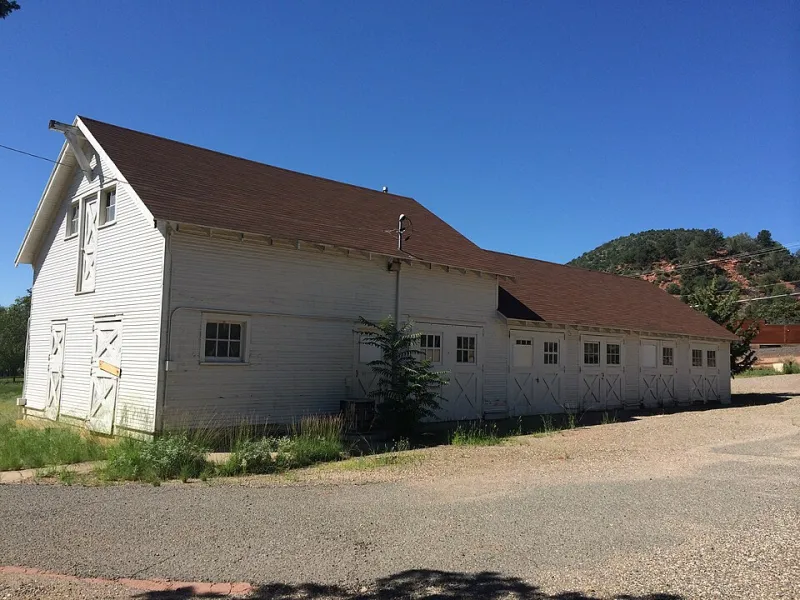
Photo: Elly van der Pas, CC BY-SA 3.0, via Wikimedia Commons
There is a particular kind of confidence that comes from a trip-planning app on a Thursday night. The route line is clean. The campsite pin is green. The weather graph shows a polite little sun. It feels like the weekend is already handled.
Then you get to the forest boundary and find a gate chained shut with a sign that says the road washed out in a storm the app never heard about.
This is not an argument against digital tools. They are good at the big picture: land ownership, topography, mileage, rough closures, and the general shape of a trip. But they are not sitting in a district office with a radio, a road report, and a fresh memory of what the last storm did to the culvert at mile four. A five-minute phone call to the local ranger district is often the highest-value prep step in a wildland weekend. It is also the step most of us skip.
The district knows the present tense
A ranger district is not a concierge desk. It is a working office with a lot of ground to cover and not enough people to cover it. Still, the staff there usually knows the things that matter most in the last seventy-two hours before a trip: whether the gate is open, whether the road is passable for a stock SUV, whether the spring is running, whether the burn ban allows a gas stove, and whether the trail crew is working in the same drainage you plan to camp in.
Apps tend to know the rules. The district tends to know the mood of the place right now.
That distinction matters. A dispersed-camping layer might say an area is open. A ranger might tell you the access road is open but the last mile has a mud hole that eats two-wheel-drive vehicles. A trail database might list a water source. A ranger might tell you it is flowing but has a posted advisory. Neither answer is a guarantee, but one is much closer to the ground.
Call with a route, not a wish
The fastest way to waste a ranger's time is to ask them to plan your trip. The fastest way to get a useful answer is to show up with a specific route and a short list of uncertainties.
Have your map open when you dial. Know the road number, the trailhead name, and the general area where you hope to camp. Then ask in plain language: I am planning to drive Forest Road 123 from the highway to the trailhead on Saturday morning. Is the gate open, and is the road passable for a stock SUV? That is a question a district office can answer quickly. What should I do this weekend is not.
Midweek calls are usually easier than Friday afternoon calls. If you are leaving in a few hours and get voicemail, leave a short message with your trip date, your route, and one or two specific questions. Do not leave a rambling message. Do not ask them to call you back after hours. If the office is closed and your trip is imminent, use the website, call the county road department, and build in a plan B.
Five questions worth the minutes
You do not need a long interview. A good call is short, specific, and respectful. Start with the website so you are not asking about things that are already posted. Then use the call for the details a web page cannot keep current.
1. What is the gate and road status right now?
Ask about the road you actually plan to drive, not the whole district. Mention your vehicle type. Ask whether there has been recent grading, washout, snow, or logging traffic. If the answer is vague, ask what they would drive if they were heading out there tomorrow.
2. Are there any current fire restrictions, and what do they allow?
Burn bans are not all the same. Some allow gas stoves and prohibit charcoal. Some prohibit all flames. Some apply to one elevation band and not another. Ask the specific question: Can I use a canister stove at this location, and is a campfire allowed at all?
3. Is my water source actually running?
Name the spring, creek, or lake. Ask whether it is flowing, whether it is frozen, and whether there is any known advisory. Do not ask the district to certify water as safe to drink. That is not their job. Ask what they would carry if they were walking the same route.
4. Is anything closed that is not obvious online?
This is where local quirks show up. A trail might be closed for a prescribed burn. A campground loop might be closed for a water-system repair. A road might be open but a bridge might have a weight limit. Hunting season might change how you want to camp. Ask about closures, work crews, and anything a first-timer would not think to check.
5. What is the one thing you would want a visitor to know?
This is the question that earns its keep. It gives the person on the other end room to tell you the thing that is not in the database: the gate that is always locked after dark, the campground host who leaves early in the season, the shortcut that looks fine on a map and is not fine in a rental car, the stock tank that makes a tempting but illegal campsite. Local knowledge is not a replacement for your own judgment, but it is a useful layer.
Be easy to help
Call during business hours. Say who you are and where you are going. Keep it brief. Accept uncertainty. If the ranger says they have not been up that road this week, believe them and adjust your plan. Thank them for the time. If they give you a useful local tip, write it down before you hang up.
Do not ask them to guarantee your safety. Do not ask them to decide whether your vehicle can make it. They can tell you what they know. The decision is still yours. The point of the call is not permission. It is calibration.
Build the call into the plan
The call is not the whole plan. It is one more layer on top of a map, a weather forecast, extra water, and a willingness to turn around. Conditions change after you hang up. A road that was passable at nine in the morning can be a mess after an afternoon storm. A burn ban can tighten. A creek can rise. Use the call to set your plan A and plan B, then keep your eyes open when you get there.
For Looking for the Wild, this is the kind of prep that fits the way we travel: low drama, high attention, and a little respect for the people who actually know the ground. The app can show you the skeleton of a trip. The district office can tell you whether the road is still attached to it. Make the call before you load the cooler. Five minutes is cheap compared with a wasted drive.