The Sunny Side of the Map: Letting Aspect Pick Your Cold-Weather Route
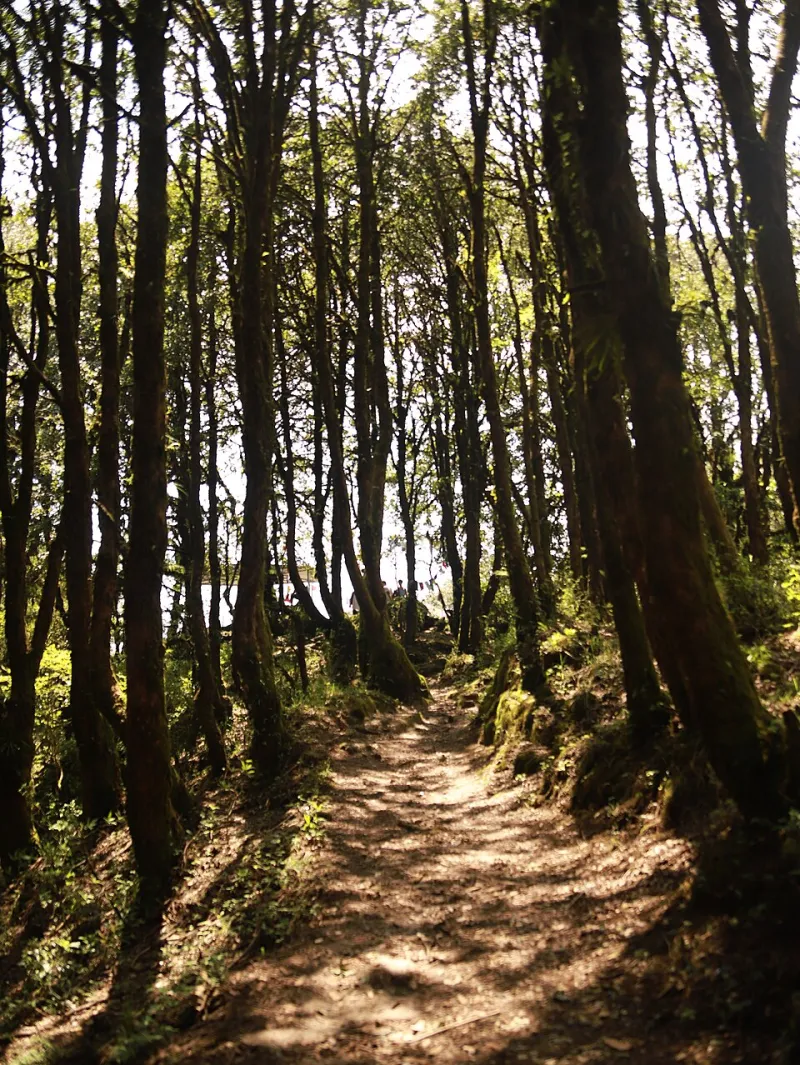
Photo: Krishna k. sahh, CC0, via Wikimedia Commons
The first cold walk of late fall has a way of exposing the truth about a trail. Maybe the parking lot felt fine, the first mile was pleasant, and then the path bent around a ridge and the world changed: shaded snow, greasy roots, a wind that seemed to come from everywhere at once. Nothing on the map said “cold.” But the map did say something. It just wasn’t in words.
Aspect—the direction a slope faces—is one of the most useful things you can read before a late-fall or winter outing. It shapes where snow lingers, where ice forms, where the ground stays dry, and where the low sun actually reaches. It won’t make you invincible, and it’s no substitute for layers, traction, or a real winter plan. But it can tilt the odds toward a more comfortable day in the wild.
Start With the Direction of the Tilt
On a topographic map, aspect is about which way the ground leans. Contour lines show elevation, and the spacing and shape of those lines tell you where the high ground sits. If the high ground is to your north and the land drops away to the south, you’re looking at a south-facing slope. Flip it around and you’ve got a north-facing slope.
That sounds simple, and in open terrain it often is. The trouble comes in the details: side drainages, ridge spurs, little bowls, and the way a trail can switch from one aspect to another in a few hundred yards. A route that looks uniformly “sunny” on a phone screen may actually spend half its mileage in shade. Pull up a hillshade layer if you have one, but don’t stop there. Trace the drainage you plan to walk. Ask which side of the creek the trail follows. Look for the contour lines that bunch up into a wall—that’s where the shade tends to live.
In the US, this matters from the Blue Ridge to the Cascades, but the stakes change with latitude and moisture. A south-facing slope in the southern Appalachians may just mean drier footing and a little more sun. In the Wasatch or the high country of Colorado, it can mean the difference between booting up packed snow and dealing with bare, frozen dirt. In the Pacific Northwest, a south-facing slope can be a welcome break from dripping fir shade—right up until it turns into a crusty mess after a freeze.
The Low Sun Changes the Rules
Winter sun is not just weaker. It’s lower and shorter-lived. A slope that bakes in July can sit in shadow for most of a December day. That’s why the “sunny side” isn’t always as sunny as it sounds. The sun rises in the southeast and sets in the southwest for much of the cold season, which means east- and west-facing slopes get their light in narrow, intense windows. South-facing slopes get the most direct rays overall, but ridges, trees, and neighboring peaks can still block them.
Think in terms of the shadow line. On the ground, it’s the edge where the day changes character: bright ground, then blue-gray shade; soft snow, then stiff crust; a warm lunch spot, then a wind tunnel. Once you start noticing it, you’ll see it everywhere—along road cuts, at the base of cliffs, under conifers, and on the inside of bends. The shadow line moves through the day, too. A spot that’s pleasant at 10 a.m. may be dim and chilly by 2 p.m.
That’s why turnaround times matter more than they do in summer. If your plan depends on sunlight to keep you warm, you need to know when the light leaves your route. A late start on a north-facing approach can mean walking back in the coldest, darkest part of the afternoon. Build in margin. Pick a turn-around time that accounts for the sun dropping behind a ridge, not just for sunset on the clock.
Read the Ground, Not Just the Map
Maps are the starting point, but the ground has opinions. Snow tells you where the sun has been. So does frost. A south-facing slope may have bare patches, dry needles, and snow that pulls back from tree wells first. North-facing slopes hold snow longer, and that snow often cycles through melt and refreeze until it becomes hard, slick, or punchy. If you see a shaded trail with a shiny crust, assume traction might be useful—and don’t be shy about turning around if it looks worse ahead.
Vegetation is another clue. In many Western forests, south-facing slopes are drier and more open, sometimes dominated by ponderosa pine, juniper, or scrub. North-facing slopes tend to be cooler and moister, with denser fir, spruce, or hemlock. That’s a generalization, not a law, but it’s a useful first read. Lichen patterns, moss, and the way snow clings to branches can fill in the rest.
And pay attention to the small stuff: where the trail is muddy but not frozen, where your boots punch through crust, where the wind is at your back instead of in your face. These are real-time aspect cues. They’re often more honest than the forecast.
Let the Sun Help—But Don’t Trust It
Choosing a south-facing route in late fall or winter can be a smart move. It may mean drier footing, more comfortable rest stops, and a better chance of seeing the landscape instead of staring at your own breath. But warmth is a bonus, not a safety system. The sun can disappear behind a ridge faster than you expect, and shade in winter is not a minor inconvenience. Carry insulation, traction, a headlamp, and the knowledge to turn around. Tell someone your plan. Check the forecast for wind and precipitation, not just temperature.
The wild doesn’t owe us a warm walk. But the land does give us clues. Read the tilt of the slope, watch the shadow line, and let the low sun help choose the route. Then bring the gear that assumes the sun won’t always be there. That’s not pessimism. It’s just good manners toward the mountain—and toward the person you’d like to be when you get back to the trailhead.