Permission to Stay Put: The Case for a Do-Nothing Day in Camp

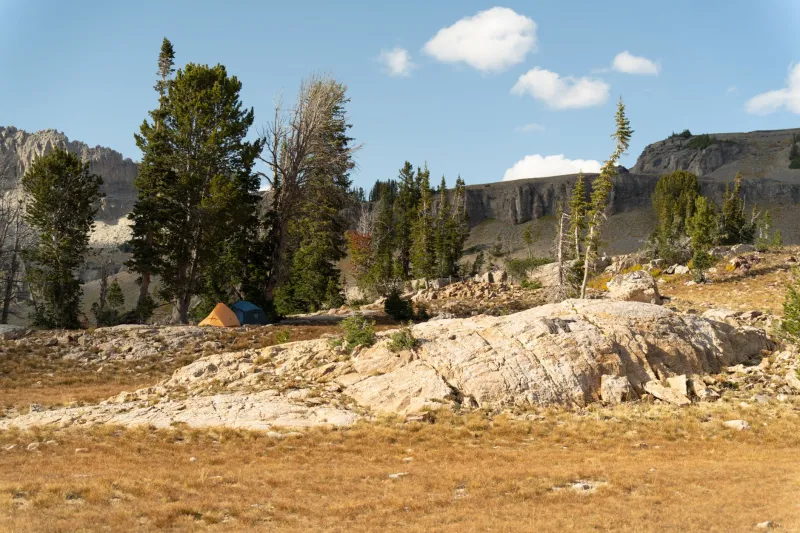
Photo: dispersed campsite tent morning coffee national forest, via tiermaker.com
Somewhere on the second or third day of a trip, the spreadsheet in my head starts making demands. We have six days. We have a route. We have a weather window. We have, supposedly, a limited supply of good light and good legs. Every hour in camp begins to feel like an hour not spent covering ground. So we pack up, tighten the straps, and go.
I have done this. I have also, once or twice, stayed put. The staying-put days are the ones I remember. Not because something dramatic happened, but because everything else stopped. The trip stopped being a list of miles and became a place we were actually in.
The Mileage Trap
Somewhere along the way, we started treating outdoor trips like itineraries. Sunrise at the lake, lunch at the pass, camp by the creek, repeat. There is nothing wrong with a plan. A plan keeps you safe and gets you to the good views. But a plan can also turn a trip into a delivery route. You start measuring the day by what you covered instead of what you noticed.
Thru-hikers have a word for this: the zero day. A day with zero miles. It is not a day off from the trail in the sense of going home. It is a day off from moving. You stay in camp, or in town, and you let your body catch up. The zero is part of the hike, not a failure of it.
Most of us are not thru-hiking. We have jobs, weekends, and a finite number of nights out. That is exactly why the zero day matters. When your time is limited, the temptation is to fill every hour. But filling every hour is how you end up needing a vacation from your vacation.
What a Zero Day Is, and Is Not
A zero day is not a lazy day. It is a deliberate day. You are not skipping the trip. You are choosing to let the trip happen where you are. The goal is not productivity. The goal is recovery, attention, and a little bit of boredom. Boredom is underrated. It is the state in which you finally notice the woodpecker that has been working the same snag for an hour.
A zero day is also not a nearo. A nearo is a near-zero, usually a short day with a few miles. If you tell yourself you are taking a zero and then hike eight miles to a viewpoint, you have not taken a zero. You have taken a hike with a late start. Be honest about what you need.
How to Choose the Right Camp
You do not need a perfect camp. You need a camp that is comfortable enough to stay in. Look for three things: water, shade or shelter, and something to watch.
Water is obvious. You need enough for drinking and cooking without a long walk. Shade matters in the desert and in the summer. Shelter matters in the mountains, where a zero day can turn into a wind tunnel. And something to watch is what makes the day feel like a place instead of a waiting room. A meadow edge, a creek bend, a rock outcrop, a stand of trees with birds moving through it. A view is nice, but a view gets old. A edge with movement does not.
If you are dispersed camping in a national forest, choose a site that has already been used. Do not clear a new spot just to have a nicer zero. The best zero-day camps are the ones where you can sit still without wanting to fix the site.
What to Do With a Day That Has No Plan
Do less than you think. Make coffee. Eat breakfast. Wash your face. Sit down again. Let the morning take its time.
Then pick one small thing. Not a hike. Not a summit. A small thing. Walk twenty minutes up the road and look at the flowers. Sit by the creek and watch the water. Repair the thing you have been ignoring. Write in a notebook. Read a few pages. Take a nap. The point is not to fill the day. The point is to let the day have some slack in it.
This is also when the good wildlife sightings tend to happen. Animals are not impressed by your itinerary. They move when the woods are quiet. If you are sitting still at camp, you are already part of the quiet. I have seen more deer, foxes, and birds from a camp chair than from a trail. That is not a coincidence. It is a consequence of not moving.
And then there are the conversations. Some of the best talks I have had on trips happened on zero days, when there was no reason to cut them short. No one was watching the clock. No one was worried about the next climb. You sit around, someone says something, and an hour disappears. That is not wasted time. That is the trip.
What Not to Do
Do not spend the day reorganizing every stuff sack. Do not turn rest into a project. Do not scroll through your phone if you can help it. Do not start packing up at noon just because you feel restless. Restlessness is part of it. Sit with it for a while. It usually passes, and something better takes its place.
Do not move camp. The whole point is to stay. If the camp is truly bad, move in the morning and take your zero somewhere else. But do not spend the day pacing around, looking for a better spot. You will miss the one you are in.
And do not apologize for it. There is a weird guilt around rest in outdoor culture. We admire the person who grinds out a big day, and we quietly wonder if the person sitting in camp is soft. That is backwards. Recovery is training. Attention is a skill. A zero day is not a gap in the trip. It is part of the trip.
The Trip You Remember
I am not arguing against big days. I love big days. I love the feeling of a pass behind me and a valley ahead of me. But I have started to plan at least one day on longer trips where the only goal is to be where I am. No mileage. No destination. No agenda.
Those days rarely make a good story at first. Nothing happened. We sat around. We drank coffee. We watched a dipper work the creek. And then, months later, that is the day I remember. Not the miles. The quiet.
So if you are staring at a trip plan that is packed tight, try leaving a hole in it. Pick a camp with water and shade. Decide not to move. Let the day be boring. The wild is often waiting for you to stop.