The Lunar Layer: Reading Moonrise and Moonset Before You Pack the Tent
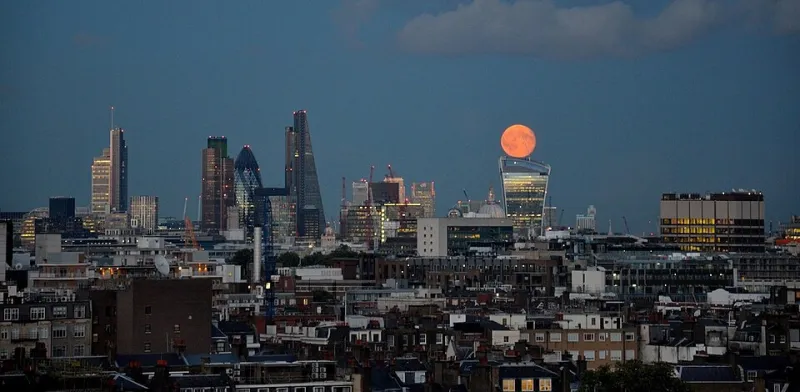
Photo: JarrahTree, CC BY 2.5 au, via Wikimedia Commons
Most trip planning starts with weather and ends with mileage. The sky gets whatever's left over — a quick glance up before you zip the tent. That's a missed tool. The moon is predictable years in advance, free to look up, and it decides more about how an overnight actually feels than almost anything else you can check from the kitchen table.
Not in a poetic sense. In a practical one. Phase and timing tell you whether the last mile gets walked by headlamp or by moonlight, whether the Milky Way reads as a smear or a structure, whether your camp is a dark room or a blue-lit parking lot with a view.
What the Moon Actually Buys You
On a clear night in open country, a full moon throws enough light to move along a familiar trail without a headlamp. That's real, and it's fun. It also comes with fine print: color vision fades, depth perception goes soft, and shadows get longer than they have any right to be. On sand or snow the effect doubles. Snow under a full moon reads almost like dusk.
At the other end, a new moon gives you actual darkness — the kind that makes a headlamp feel like a flare. This is when the Milky Way core shows up properly in the Northern Hemisphere, roughly March through October, peaking on summer nights. If stargazing is the point of the trip, this is the only window that matters.
The quarters in between are the underrated ones. First quarter hangs high at sunset and sets around midnight — bright evening, dark after you turn in. Last quarter is the mirror image: rises near midnight, high and bright at dawn. Almost nobody plans around them, and they solve specific problems beautifully.
The Three Skies Worth Chasing
The dark camp
Aim for three days either side of the new moon. Arrive before sunset, eat early, and give yourself the hours between 9 p.m. and 1 a.m. with your head tipped back. Do nothing else. This is not a hiking trip with stars attached; the sky is the activity.
The moonlit walk
Full moon plus or minus a day or two. The moon rises near sunset and sets near sunrise, so you get light for the whole night. Terrain decides everything here. On an open ridge, a slickrock bench, or a snowfield, the moon genuinely functions as illumination. In timber or a narrow canyon, it's a rumor. Pick your ground accordingly.
The half-lit shoulder
First quarter for a bright evening and a truly dark middle-of-the-night. Last quarter for a dark evening and a moonlit pre-dawn start. If you like being on trail at 4:30 a.m. with somebody else paying the light bill, last quarter is your phase.
The Workflow, Start to Finish
Pick the trip first, then the sky. Decide what kind of night you want — stars, moonlight, or a pre-dawn push — and then go find dates that deliver it.
Get the phase across your whole travel window. A three-night trip spans three different skies. Moonrise drifts roughly 50 minutes later each evening, which means night two is never quite night one.
Pull moonrise and moonset for your trailhead coordinates, not the nearest city. Time zone and longitude both bite. A desert park on the western edge of a time zone can be off by an hour from the town you typed in. The Naval Observatory's calculator and the major almanac sites both handle coordinates fine.
Be honest about the horizon. A 600-foot canyon wall hides the moon for an hour or more after official moonrise. A ridge you're camped behind does the same at set. The number is a number; the land is the land.
Layer on a light-pollution map. The Bortle scale isn't gospel, but it's a good tiebreaker between two otherwise equal campsites. A metro area 150 miles away can still paint a dome of glow along your southern horizon. Look at the map, then look at which direction your best sky sits.
Check the core season if the Milky Way is the goal. Winter nights are dark and glorious and empty of galactic center. No amount of planning fixes orbital mechanics.
Write it down. Moonrise time, moonset time, phase, and the direction you want your tent door facing. Four lines in a notebook beat a half-remembered screen in a dead cell zone.
Two Trips to Steal
New moon in the high desert. Pick a dispersed site on BLM or Forest Service land near, but not inside, a designated dark sky park — Great Basin, Natural Bridges, Cedar Breaks, Big Bend all have surrounding public land with room to spread out. Camp on a mesa or bench, not in a wash. Canyons kill sky. Bring a chair that reclines.
Full moon on a winter ridge. Choose a well-graded forest road or a wide snowshoe route you already know, and walk it after dinner instead of before. Familiarity is the safety margin here. Pack a headlamp anyway — moonlight is generous, not reliable, and a cloud deck doesn't care about your itinerary.
The sky is the one part of a trip you can plan a year out and never get wrong. It's worth ten minutes before you leave the house.