The Trail From the Inside Out: A First-Timer’s Day on a Public-Land Work Crew
Most trail workdays start before the trail does. You meet in a gravel lot beside a Forest Service office, a trailhead vault toilet, or a diner that opens early enough for people carrying loppers. Everyone looks a little too clean. Then a crew leader hands out hard hats, gives a safety talk, and walks you toward a stretch of trail that needs help. By lunch, you have dirt under your fingernails and a new sense of what a trail actually is.
That is the strange gift of a volunteer workday on public land. You sign up thinking you will give something back. You leave realizing you have been reading trails wrong for years.
Find a Workday That Fits Your Life
You do not need to be a trail-building expert to join a crew. You need a day, a pair of boots, and a willingness to work at someone else’s pace. The trick is finding the right project.
Start close to home. National forest district offices often list volunteer opportunities, and many have a volunteer coordinator who can point you toward upcoming projects. Local trail associations are another good bet: groups that maintain sections of the Appalachian Trail, Pacific Crest Trail, or Continental Divide Trail run workdays throughout the season, as do many regional hiking clubs and mountain bike organizations. Volunteer.gov and the American Hiking Society’s volunteer listings are useful national starting points, but the best leads often come from a phone call to a ranger district or a message to a local trail group.
Ask a few practical questions before you commit. How long is the workday? Is there a hike to the site? Are tools provided? What kind of work is planned? Late-fall projects in many national forests focus on drainage, leaf clearing, brushing, and culvert cleaning before winter, which means you may be digging more than you are hiking. That is not a bad thing. It is just helpful to know.
What to Bring, and What to Leave Behind
Wear sturdy boots and long pants, even if the forecast looks mild. Trail work involves branches, rocks, and tools that swing. Bring work gloves, eye protection, a hat, sunscreen, and more water than you think you need. Pack a lunch, a rain shell, and a layer you can shed once you start moving. A small daypack is plenty.
Leave the headphones at home. Half the value of the day is hearing the crew leader, the tools, and the woods. Leave the cotton shirt, too, if you can. And leave your own chainsaw unless you are certified and specifically invited to bring it. Most crews provide tools and teach you how to use them safely.
One more thing: bring curiosity. The person next to you may have been maintaining that trail for twenty years. They can show you more in ten minutes than a trail maintenance manual can in ten pages.
What the Day Actually Looks Like
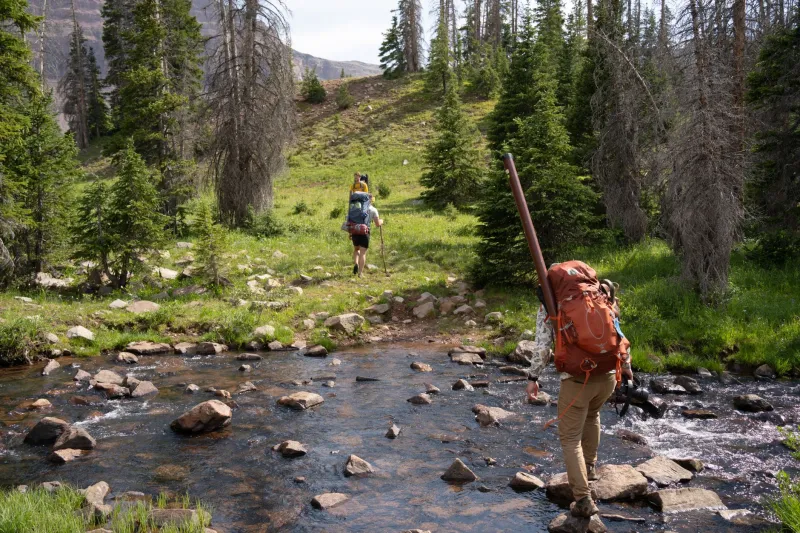
The morning usually begins with a tailgate safety talk. You learn where the tools are, how to carry them, and what to do if someone gets hurt. Then you walk to the work site. Sometimes it is a short stroll. Sometimes it is a mile or two with a McLeod over your shoulder.
Once you arrive, the crew leader demonstrates the task. Maybe you are clearing a plugged culvert so water can move off the trail. Maybe you are cutting back brush that has narrowed the corridor. Maybe you are building or cleaning a water bar, or reshaping a drain that has filled with leaves and silt. The work is repetitive, physical, and oddly satisfying. A good drain does not look like much. But when the next storm hits, it keeps the trail from turning into a creek.
You will probably work slower than you expect. That is fine. Trail work is not a race. The crew leader will check your work, adjust your technique, and keep an eye on the weather. You will take breaks. You will eat lunch sitting on a log or a rock. You will notice muscles you forgot you had.
The Part Nobody Tells You
Here is what changes after a day on a crew: you start seeing the trail as a piece of infrastructure. You notice where water wants to go. You spot a failing drain before you step in the mud. You see the cut in the hillside and understand why the trail swings wide around it. You notice brushing that needs to happen, and cribbing that is holding a section together, and the small grade reversals that keep a slope from washing out.
That knowledge does not make the woods less wild. It makes the wildness feel more human-scale. A trail is an agreement between people and a place, renewed a few hours at a time by volunteers with shovels and loppers. Once you have spent a day on the working end of that agreement, every hike carries a little more context. You still go out there to disappear for a while. You just also know who kept the path from disappearing first.
If you have been looking for a different kind of wild trip, this is it. Not a summit, not a secret lake, not a gear upgrade. Just a gravel lot, a crew leader, and a trail that needs you for a day. Bring work gloves. Leave with dirt under your fingernails.